
Hanbok: traditional Korean clothing and its parts
Hanbok is traditional Korean clothing, with many styles whose familiar forms include a jeogori jacket worn with a skirt or trousers. It is worn for occasions such as weddings and holidays, and adapted versions can also be worn in everyday life.
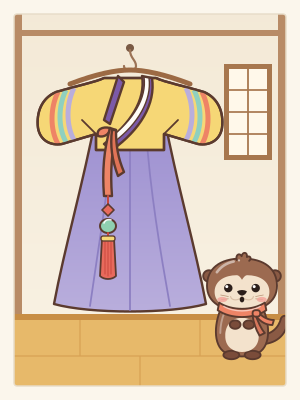
What makes an outfit hanbok?
The word hanbok names Korean clothing; it is not the name of one fixed dress. A familiar women’s outfit pairs a chima skirt with a jeogori jacket. A familiar men’s outfit pairs baji trousers with a jeogori. Additional garments, accessories and silhouettes depend on the period, occasion and design.
The jacket’s ties, or goreum, are a recognisable detail, but fastening and styling vary. A roomy skirt can give an outfit a broad flowing line, while trousers create another silhouette. Fabric weight changes how garments move and feel: a crisp ceremonial outfit and a comfortable everyday version can both belong in a conversation about hanbok.
Colours and decoration may carry meaning in a particular historical or ceremonial setting. Do not assume that a colour has one universal meaning across every modern outfit. A useful question is whether a person chose a colour for the occasion, a memory or simply because they liked it.
Modern hanbok can adapt lengths, fabrics, fastenings and shapes for everyday use. “Traditional” does not mean clothing has stopped changing, and an outfit made today need not be a museum reconstruction. If you recognise hanbok from a historical drama, remember that screen styling, historical dress and a friend’s own clothes are different subjects.
When is hanbok worn?
Hanbok has no single calendar date. It may be worn at Seollal, Chuseok, weddings and other family occasions. Some people borrow or rent it for an event or a cultural visit, while others keep clothing that belongs to a family memory. Daily adaptations are another reason it appears outside formal celebrations.
An invitation or venue may give guidance on clothing. If you are borrowing or renting an outfit, ask how the pieces fasten, how to move comfortably and how to care for the fabric. An unfamiliar tie is easier to learn by asking than by pulling it tighter.
In Japanese, chima jeogori often names the women’s skirt-and-jacket combination. Hanbok is the broader word, so those terms are not exact synonyms. In English, “Korean dress” can also sound narrower than the trousers, jackets and varied outfits that hanbok includes.
Words to know
The garment names let you talk about a specific detail. Spellings on rental signs or clothing descriptions can differ from these romanisations; keep the Korean word alongside the reading when you ask.
| Term | Reading | Meaning |
|---|---|---|
| 한복 | hanbok | Traditional Korean clothing and its adapted forms. |
| 저고리 | jeogori | The jacket worn in familiar hanbok outfits. |
| 치마 | chima | A skirt; in hanbok, the skirt paired with a jeogori. |
| 바지 | baji | Trousers, including those in hanbok outfits. |
| 고름 | goreum | Garment ties, especially those on a jeogori. |
Ask your pen pal
Focus on a colour, design or feeling. For friendly wording, see Korean letter phrases; Korean pen pals gives the app’s matching details.
- 어떤 한복 색을 좋아해요? — What hanbok colours do you like?
- 한복을 입어 본 적 있어요? — Have you ever worn hanbok?
- 치마와 저고리의 어떤 조합이 좋아요? — What combination of skirt and jacket do you like?
- 생활한복을 본 적 있어요? — Have you seen everyday hanbok?
- 옷에 얽힌 좋은 기억이 있어요? — Do you have a happy memory connected with clothing?
A postcard about hanbok
A colour is a small, concrete starting point for a clothing postcard. Compare a shade you like with a fabric or outfit you have read about. A memory question can bring in your friend’s own clothes.
안녕하세요! 한복의 치마와 저고리에 대해 읽었어요. 저는 차분한 파란색을 좋아해서 파란 한복이 궁금해요. 좋아하는 색이나 옷에 얽힌 추억이 있어요?
In Sea Pals
A favourite colour can lead to a letter about clothes and memories in Sea Pals. Try it in a hanbok postcard, or use the question to practise Korean with a pen pal.