
Setsubun: Japan’s bean-throwing custom before spring
Setsubun is the day before Risshun, the traditional beginning of spring, associated with scattering beans to send misfortune away and welcome good fortune. It usually falls on 3 February but sometimes on 2 February, and customs differ between homes, shrines, temples and regions.
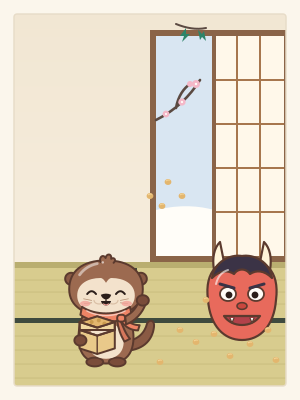
Beans, an oni mask and a familiar chant
The activity often associated with Setsubun is mamemaki, scattering beans. In some homes, a person wears an oni mask while others throw beans and call “Oni wa soto, fuku wa uchi”: out with the oni, in with good fortune. Oni are figures in Japanese folklore, often translated as demons or ogres; that translation is a starting point, not a full description of every story.
The chant separates an unwelcome presence from the good fortune being invited in. A playful mask can make the household version lively, but not every family does it. Some shrines and temples organise their own events, which can follow different wording and procedures. Watch the venue’s instructions rather than copying an online clip into a religious setting.
Food is another part of the season for some people. Ehōmaki is a sushi roll associated with eating towards a fortunate direction. The custom has regional roots and is now encountered more widely, but it is not a requirement that every person follows. A friend may know Setsubun through a meal, a childhood mask or an event, or may barely mark it at all.
Why the date is not permanently 3 February
Setsubun here means the day before Risshun, the beginning of spring in the traditional seasonal calendar. Risshun’s timing can shift in the modern calendar, so Setsubun is usually 3 February and sometimes 2 February. Avoid assuming the familiar date is correct for every year.
This beginning of spring is a seasonal calendar marker, not a promise of warm weather. It can still feel wintry outside. A postcard can describe that contrast: a spring custom while you still need a coat. It is also different from the start of the modern year and from lunar New Year customs.
For a particular year or event, check a reliable calendar or the venue’s announcement. The date of a public ceremony may also depend on the venue’s arrangements, so use its announcement when discussing a visit.
Words to recognise on a Setsubun notice
The readings use Japanese romanisation. Learn the full chant as well as the name mamemaki, so you can tell an activity from its spoken words. Japanese letter phrases has greetings to put before a seasonal question.
| Term | Reading | Meaning |
|---|---|---|
| 節分 | setsubun | The seasonal division; here, the day before the traditional start of spring. |
| 立春 | risshun | The traditional beginning of spring. |
| 豆まき | mamemaki | Scattering or throwing beans. |
| 鬼は外、福は内 | oni wa soto, fuku wa uchi | Out with the oni, in with good fortune. |
| 恵方巻 | ehōmaki | A sushi roll associated with a fortunate direction. |
Ask your pen pal
Share one detail that caught your attention and let your friend choose which memories to discuss. If an oni appears in a favourite story, anime pen pals can be another connection.
- 豆まきをしたことがありますか? — Have you ever taken part in mamemaki?
- 節分で思い出すことはありますか? — Does Setsubun bring anything to mind?
- 鬼のお面を見たことがありますか? — Have you ever seen an oni mask?
- 恵方巻を食べたことがありますか? — Have you ever eaten ehōmaki?
- 春が近づくと、何が楽しみですか? — What do you look forward to as spring gets closer?
A postcard about spring arriving on the calendar
Pair the unfamiliar word with the detail you found interesting. Saying whether it still feels cold where you are gives the recipient something personal to respond to.
こんにちは! 節分の「鬼は外、福は内」という言葉を覚えました。暦では春が近くても、まだ寒いのが面白いですね。こちらもまだ寒いです。節分で思い出すことはありますか? 私は春の花を楽しみにしています。
A culture postcard in Sea Pals
What are you looking forward to as spring approaches? Put it in a Setsubun postcard for a Sea Pals pen pal, with a question about a custom that caught your interest.