
Korean age: counting age, international age and year age
“Korean age” usually means counting one year at birth and adding a year each New Year, rather than on a birthday. South Korea standardised international age as the legal default on 28 June 2023, while counting age remains in social use and year age is used for some laws.
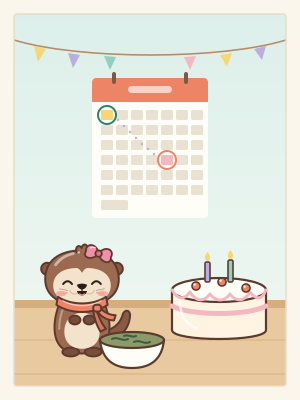
How the three age systems work
International age, called man nai in Korean, counts completed years since birth. A baby starts at zero, and the number increases on each birthday. Before your birthday in a given year, your age is the current year minus your birth year minus one. On and after the birthday, it is the current year minus your birth year. This is the system familiar in many countries.
Traditional counting age starts at one at birth. Everyone using that convention adds a year at the start of the calendar year, regardless of when their birthday falls. Its formula is current year minus birth year plus one. That is why the counting-age number can be one or two higher than international age: the birthday determines the gap, not a difference in elapsed time.
Year age, or yeon nai, is a third calculation: current year minus birth year. It has no extra year at birth and no birthday adjustment within the year. It is not another name for international age. At some times the two numbers happen to agree; that does not make the methods identical.
Take an imaginary person born late in a year. Early in a later calendar year, before their birthday, counting age is two higher than international age and year age is one higher. After the birthday, international age catches up with year age, while counting age stays one higher.
When a conversation contains an unfamiliar number, the useful question is which convention the speaker means. Do not infer someone’s maturity, relationship or life stage from an unexplained number.
When does the number change?
International age changes on the birthday. Counting age commonly changes on 1 January, the Gregorian New Year; year age also changes when the calendar year changes. The counting-age formula does not use Seollal as its default annual changeover, even though Lunar New Year traditions often talk about becoming a year older.
From 28 June 2023, international age became South Korea’s standard legal default. That change did not make traditional counting age disappear from casual conversation, and year-age calculations still exist for some laws. A cultural explainer cannot tell you which number a particular official form requires: use the instructions attached to it.
For a pen pal, learning the vocabulary is more useful than collecting a birth date to calculate a number. You can ask about the different systems in general, or avoid age questions altogether. Learning Korean through letters offers plenty of other conversation topics.
Words to know
The same English word “age” can hide different calculations. These Korean terms name the distinction; counting-age expressions may also be worded differently in ordinary conversation.
| Term | Reading | Meaning |
|---|---|---|
| 만 나이 | man nai | International age: completed years, increasing on birthdays. |
| 세는나이 | seneun nai | Counting age: one at birth, plus one at each calendar New Year. |
| 연 나이 | yeon nai | Year age: current calendar year minus birth year. |
| 생일 | saengil | Birthday, the changeover for international age. |
| 나이 | nai | Age; the system needs to be clear from context. |
Ask your pen pal
Ask about language rather than asking your friend to calculate or disclose personal details. A friendly explanation of how age is expressed where you live makes this an exchange. Korean letter phrases help with polite questions, and K-pop words covers a different kind of everyday vocabulary.
- 만 나이와 세는나이를 어떻게 설명하면 좋을까요? — How would you explain international age and counting age?
- 연 나이라는 말을 자주 들어요? — Do you often hear the term “year age”?
- 일상에서는 어떤 나이 표현을 써요? — What age expressions do you use in daily life?
- 생일 축하 인사는 어떻게 해요? — How do you wish someone a happy birthday?
- 한국어에서 헷갈리기 쉬운 표현이 있어요? — Is there a Korean expression that is easy to mix up?
A postcard about a word you learnt
Name the system you found interesting and compare it with the convention familiar to you. A question about wording invites a language tip.
안녕하세요! 만 나이와 세는나이에 대해 읽었어요. 같은 나이도 표현하는 방법이 다를 수 있다는 게 흥미로워요. 저는 생일마다 나이가 늘어나는 방식에 익숙해요. 한국어에서 헷갈리기 쉬운 표현이 또 있어요?
In Sea Pals
If a Korean age expression surprised you, tell a pen pal what you learnt in a Sea Pals letter. A postcard draft can help you find the words; Korean pen pals shows how to begin exchanging letters.